
The Playbook
Why “Near Me” Searches Work Differently in a Town the Size of Manitowoc
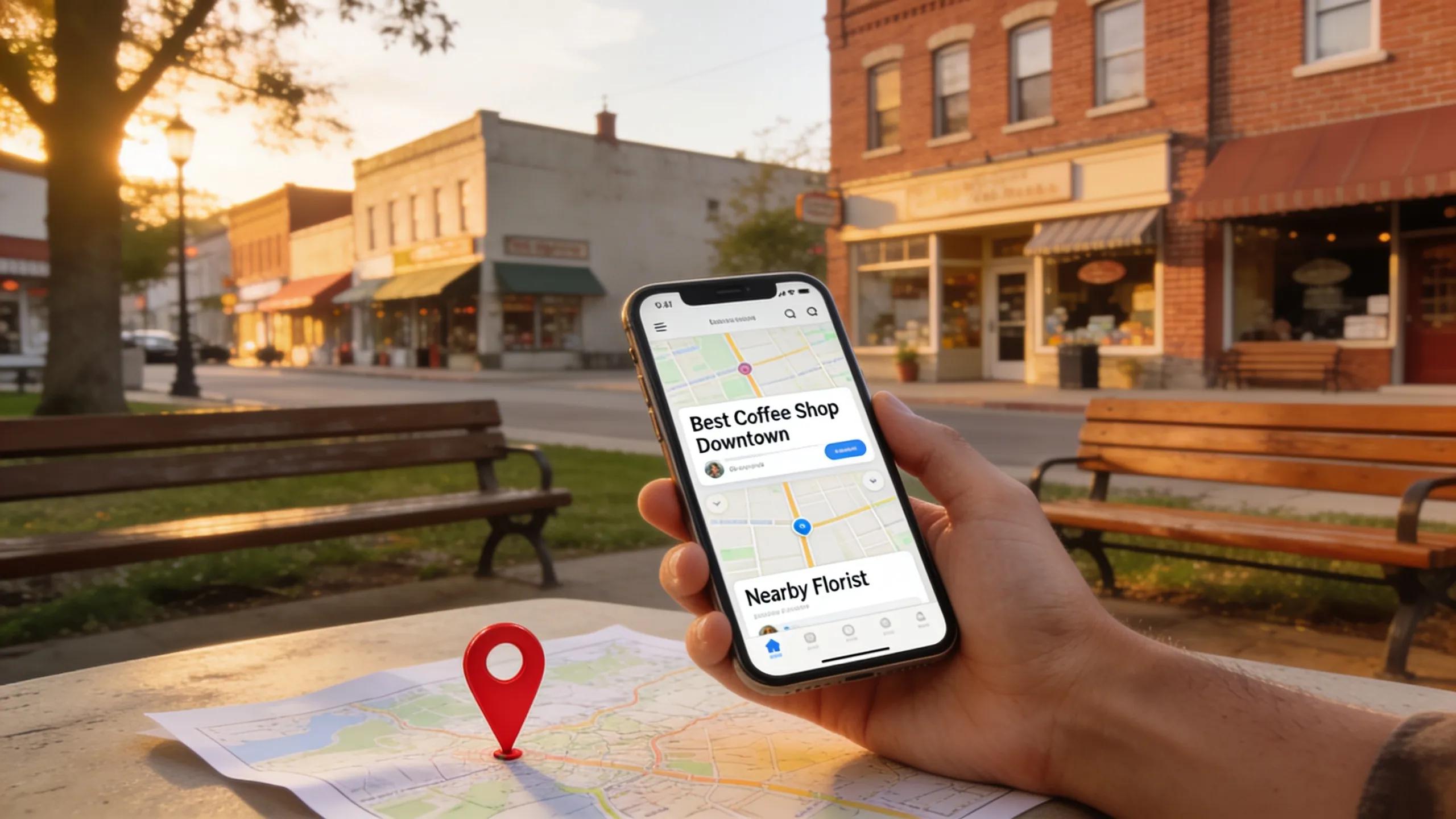
Type “HVAC company near me” into Google while standing on the Lakeshore, and you won’t see fifty companies fighting for attention. You’ll see a handful. Maybe six. Maybe eight, if you count Two Rivers and Kiel. That’s not a flaw in the search results — that’s just what Manitowoc is. And it changes the whole game for how a local trades business should think about showing up online.
If you’ve ever wondered whether “near me” search even matters in a market this size, or figured SEO is a big-city thing that doesn’t apply to a town like Manitowoc, this is worth five minutes of your time. The short version: it works differently here, and understanding the difference is the whole opportunity.
Fewer competitors, but every one of them counts more
In a big metro area, a plumber might be competing with dozens of other plumbers for the same Google Map Pack slots — that’s the group of three business listings that show up with a map when someone searches “plumber near me.” With that many competitors, ranking well is genuinely hard, and even if you get it right, you’re one of a crowd.
Manitowoc doesn’t work that way. There’s a smaller pool of businesses in most trades actively competing for those same three Map Pack slots. That’s not a guess about exact numbers — nobody has a reliable count, and we’re not going to pretend otherwise — but if you’ve worked in this market for any length of time, you already know it in your gut. You can probably name most of the other companies in your trade around town without much effort. That’s a small market, by definition.
Here’s the part that surprises people: fewer competitors doesn’t mean ranking well matters less. It means it matters more. In a market this size, there’s less noise to get lost in. When someone in Manitowoc, Two Rivers, or Valders searches for what you do, there are only so many businesses that could reasonably show up. If you’re not one of the ones that shows up, someone else is — and there’s no long list of “page two” competitors soaking up the overflow. There often isn’t a page two, or if there is, almost nobody scrolls to it.
What “the market” actually looks like around here
Manitowoc is a Lake Michigan port city on Wisconsin’s Lakeshore, and the search behavior of the people who live here reflects that geography. Someone in Two Rivers searching for a roofer isn’t thinking about Green Bay or Sheboygan — those are roughly an hour or so away, close enough to visit but far enough that most people want somebody local for a job at their house. Someone in Mishicot, Valders, Kiel, Newton, or Reedsville is typically searching with an even more local mindset, because driving into “town” already feels like a trip.
That regional pattern is good news for a trades business, because it means your real competitive set is small and local, not the entire eastern half of Wisconsin. You’re not trying to out-rank a company based in Green Bay for a Manitowoc homeowner’s search — Google is generally smart enough to know that homeowner wants somebody close by. You’re competing with the other businesses actually operating in your immediate service area. That’s a much shorter list to beat.
Why so many local competitors are still sitting on the sidelines
Here’s the opportunity side of this. In a lot of small regional markets, the businesses that have been around the longest are also the ones that have invested the least in how they show up online. That’s not a knock on them — it’s usually just that word of mouth and a good reputation carried them for years, so investing time and money in local search never felt urgent.
That pattern tends to show up as some combination of the following, without naming any specific business:
- A Google Business Profile that hasn’t been touched in months — no recent posts, photos, or updates
- A handful of reviews total, with long gaps between them
- A website that was built years ago and hasn’t been updated to reflect current services, service areas, or photos
- No dedicated pages for the smaller nearby towns a business actually serves
- Nobody actively asking happy customers to leave a review
None of that means those businesses are doing badly — plenty of them are busy and profitable, running mostly on referrals and reputation. But it does mean the bar for showing up well in local search, in a market this size, is often lower than people assume. You don’t need to out-market a national chain. You need to be the business in your trade that’s actually paying attention to its local SEO while others aren’t.
The flip side: mistakes get seen too
There’s a less comfortable version of this same dynamic. In a small market, a slow response to a bad review, a website that looks outdated, or a missed call doesn’t just quietly disappear into a sea of competitors — it’s more visible, because there are fewer businesses for a searching customer to compare you against. People notice, and word travels fast in a town this size, both online and off.
That cuts both ways, though. It means a consistent, professional online presence stands out just as much as a neglected one does. If you’re reliably responding to reviews, keeping your information current, and answering the phone (or making sure it gets answered), that consistency is doing real work for you in a market where people notice the difference.
What actually moves the needle in a market this size
None of this requires an enormous marketing budget or a nationwide campaign. In a small regional market, a handful of fundamentals tend to matter more than anything flashy:
- A complete, accurate, and regularly updated Google Business Profile — correct service area, current hours, real photos, and posts that show you’re active
- A steady flow of genuine reviews, and responses to all of them, good or bad
- A website that actually says what you do, where you do it, and makes it easy to reach you
- Someone answering the phone or following up quickly, because in a small market a missed lead often means that customer just calls the next name on the list
- Consistent business information across the places people find you online — directories, maps, social profiles
That last point about answering the phone matters more than people expect. If calls are going to voicemail during busy seasons or after hours, that’s a real cost in a market where the caller has only a few other options — and an easy one to fix with something like an AI receptionist that picks up when your team can’t.
Should every trades business here chase “near me” search?
Honestly, not equally. If your work is almost entirely repeat customers and word-of-mouth referrals in a very tight service area, the return on aggressive local SEO investment may be modest — you’re already winning the customers you need. But if you rely on new customers finding you cold, especially seasonally (storm damage, furnace failures, moving season), showing up when someone searches is often the difference between getting the call and never being considered at all.
It’s also worth being honest that local search isn’t the only lever. A strong website, a clean set of reviews, and a system that follows up with leads all work together — a website that represents you well and a system for gathering and responding to reviews tend to reinforce whatever ranking gains you make, rather than either one doing the job alone.
Common Questions
Does “near me” search even work in a small market like Manitowoc?
Yes — it works, and arguably matters more, not less. In a smaller regional market there are fewer local businesses actively competing for the same handful of Google Map Pack results, so there’s less noise for a well-optimized business to get lost in. A trades business that shows up consistently for “near me” searches around Manitowoc has a real, durable advantage over one that doesn’t.
How many businesses are actually competing for local search in Manitowoc?
There’s no reliable public count, and any specific number would be a guess dressed up as data. What can be said honestly is qualitative: in most trades, the group of businesses actively competing for the top local search results in Manitowoc is small compared to a metro area, which is exactly why ranking well here carries outsized weight for the businesses that do it.
Do I need to rank in Green Bay and Sheboygan too, or just Manitowoc?
For most trades businesses, focus on Manitowoc and the immediately surrounding communities first. Green Bay and Sheboygan are roughly an hour or so away, and homeowners in those cities typically search for and hire local providers closer to home. Expanding into those markets only makes sense if you already have the crew capacity and service-area reach to genuinely support jobs that far out.
What towns should a Manitowoc-based trades business target for local SEO?
Start with the communities you actually serve — for many Manitowoc-based businesses that includes Two Rivers, Mishicot, Valders, Kiel, Newton, and Reedsville. Building out real, specific content for the towns you cover (not just Manitowoc itself) helps you show up when someone in those smaller communities searches, since they’re often underserved by competitors who only optimize for the county seat.
Is it worth investing in local SEO if my business already runs mostly on referrals?
It depends on how much new customer volume you actually need. If referrals reliably fill your schedule, the return on aggressive local SEO investment may be modest. But most trades businesses still get a meaningful share of new customers from cold searches, especially during emergencies or seasonal spikes, and showing up well in those moments is where local search earns its keep.
Why do older, established local businesses often rank poorly online?
Usually because they’ve never needed to invest in it — years of word-of-mouth and reputation carried them without a strong online presence. That often shows up as a stale Google Business Profile, few reviews, or an outdated website. It’s not a sign the business is struggling; it’s a sign nobody there prioritized this piece, which is exactly the gap a more active competitor can close.
What’s the single biggest local search mistake trades businesses make?
Letting the Google Business Profile go stale — outdated hours, no recent photos, no posts, and reviews left unanswered. In a small market, that profile is often the first and sometimes only impression a searching customer gets, and neglecting it is more noticeable here than in a big city where one listing gets lost among dozens of others.
Does a missed phone call really matter that much in a market this size?
Yes, more than in a bigger city. When there are only a few realistic options for a given trade in Manitowoc, a caller who reaches voicemail often just moves down a short list to the next name rather than waiting for a callback. Making sure calls get answered, even after hours, protects leads that a small market gives you very few chances to win back.
How long does it take to see results from local SEO in a small market?
It varies by trade, current online presence, and how much competition exists for a given service, so there’s no fixed timeline that applies to every business. Consistent, ongoing work — profile updates, reviews, content for the towns you serve — tends to compound over months rather than deliver overnight results, which is normal for local search generally, not unique to Manitowoc.
Proximity behaves differently here, and it changes what is worth optimizing. The free Local SEO course covers how Google actually picks the three on the map, proximity included.
Can a small trades business realistically compete without a big marketing budget?
Yes, and that’s part of what makes a smaller regional market different. The fundamentals — an accurate Google Business Profile, steady reviews, a clear website, and reliable follow-up — matter more here than expensive advertising, precisely because there’s a shorter list of competitors to stand out from. Consistency tends to beat budget in a market this size.
If you’re not sure where your business actually stands in Manitowoc-area search results right now, that’s worth finding out before guessing at fixes. Book a free audit and we’ll walk you through exactly what’s helping and what’s holding you back.

Michael Cummings
Founder of MCM Digital Products. Building and running growth engines for service businesses since 2011 — from Manitowoc, Wisconsin, where his neighbors have elected him to City Council three times.
More about Michael →
Run this play in your business
Want this working for you — without doing any of it yourself?
Every play on this site is something we build and manage for clients every day. Book a free audit and I'll show you exactly where this applies to your business — with your real data.
Get My Free Business AuditPrefer to learn it yourself? Start free in the MCM360 Academy →