

The Playbook
The First 90-Degree Day: Why the Phone Explodes and You Still Lose Jobs
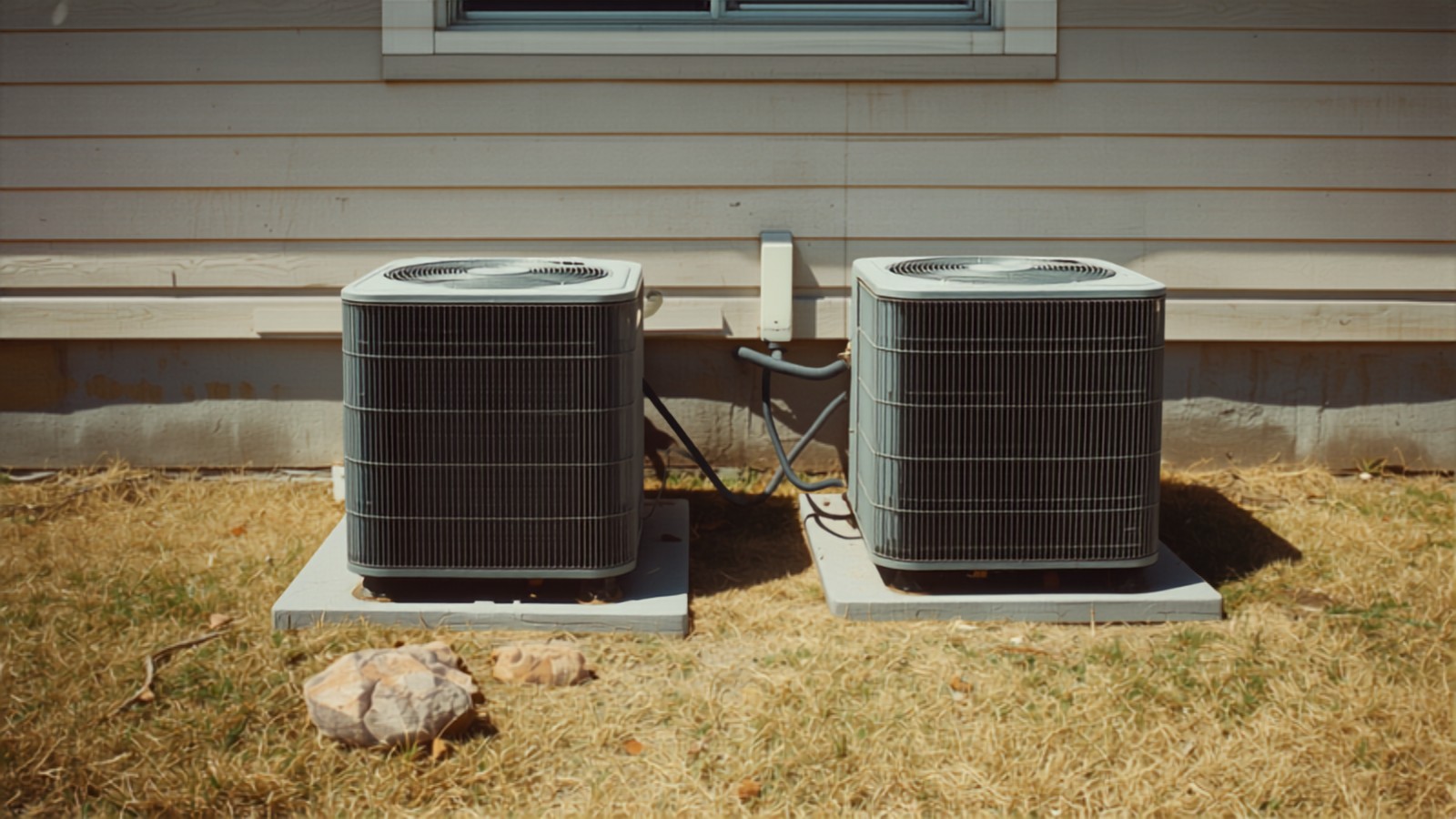
It is the middle of June. The last few weeks have been mild, windows-open weather, and your board has been mostly maintenance and a couple of duct jobs. Then the wind shifts off the lake and the temperature climbs into the nineties before noon.
By nine in the morning the phone has already rung more times than it did all of last week. By eleven it is ringing while you are on it. Your techs are stacked out, your dispatcher is trying to move appointments that cannot be moved, and the calls keep landing. Some of them you answer. Most of them you do not. Voicemail takes the rest.
By the time anybody sits down at the end of the day and starts working through that voicemail box, a good number of those people have already called somebody else. Some of them got through. That is the part that stings, because a few of those calls were the ones you actually wanted.
If you run a heating and cooling company anywhere in Manitowoc County, you have lived this day. It happens once or twice a summer, and it happens to everybody in the trade at the same time, which is exactly why the customers you miss have no trouble finding an alternative.
Why you cannot staff for that day
Start with the honest part, because everything else follows from it.
Peak demand on the first real hot day is not a staffing problem you can solve. The call volume on that one day is a multiple of a normal day. You would have to carry people all season who have nothing to do the rest of the time, and you would still run out of trucks. There is no schedule that absorbs it.
Trying to serve everyone on that day is how good techs quit. You push them into a fourteen-hour stretch in attics and crawlspaces in that heat, then do it again the next day because the backlog rolled, and by August somebody is done. The company that overpromises on the hot day pays for it in September.
So the goal is not to take every job. The goal is to lose fewer of the ones worth taking, and to leave the rest of the callers with a decent impression instead of a full voicemail box.
The real problem: good calls and bad calls sound identical
Here is what makes that day expensive rather than just busy.
The calls come in on one line, in no order, and you cannot tell them apart until somebody asks a question. On a normal Tuesday you have time to ask. On the hot day you do not.
Sitting in that same voicemail box, in the same tone of voice, you have:
- A homeowner whose twenty-two-year-old unit finally quit, who is ready to talk about replacement.
- A no-cool on a system somebody installed three years ago that is still under manufacturer warranty.
- A property manager with four buildings who has never used you before.
- A restaurant with a rooftop unit down, which is a commercial account and a same-day emergency.
- A landlord shopping four companies for the cheapest diagnostic and planning to go with whoever answers first.
- Somebody whose filter is packed solid and who does not need a truck at all.
- Three people outside your service area who found you on a search.
All of those hit the same line, in the same fifteen minutes, and every one of them sounds like “my air conditioning isn’t working.” Until somebody asks about the age of the equipment, whether it is a home or a business, and where the property is, they are indistinguishable.
Which means the calls you would most want are not just missed. They are missed at random. You are not choosing which jobs to skip. The order of the voicemails is choosing for you.
Triage without a human on the phone
The fix is not answering more calls. It is asking the sorting questions without needing a person free to ask them.
Every caller can be sorted with a handful of questions, and they are always the same handful:
- Is this a home or a commercial property?
- What town is the property in?
- Is there no cooling at all, or is it cooling poorly?
- Roughly how old is the system?
- Have we been out to this address before?
- Is anyone in the home elderly, very young, or medically vulnerable?
That last one matters more than it looks. On a genuinely hot day, an older customer without cooling is a safety call, not a comfort call, and you want that flagged before it sits in a queue for six hours.
Those questions do not require judgment. They require somebody to ask them and write the answers down. That is the piece that can be handled without a human on the line — by a system that answers every call on the first ring, asks the same questions in the same order, and drops a sorted, written record into one place your dispatcher can read down at a glance. Same on your website: a short form that asks those questions, instead of a contact box that just says “how can we help?”
Once the calls are sorted, the day changes shape. You are not working a voicemail box in the order it filled up. You are working a list where the rooftop unit, the elderly customer with no cooling, and the twenty-two-year-old system that finally died are sitting at the top, and the filter question and the out-of-area calls are sitting at the bottom where they belong.
What a realistic callback window looks like
People are far more forgiving of a wait than of silence. What they will not forgive is being told a time and not hearing from you at that time.
So do not promise a callback in a set number of minutes on the worst day of the season. You will break it, and breaking it is worse than never saying it. Say something true instead: that it is an extremely heavy call day, that their information is in front of your dispatcher, and roughly when they can expect to hear back — later today, tomorrow morning, whatever you can actually stand behind.
Then make sure the person who took the message is not the only thing standing between that promise and reality. Confirmations, reminders, and the follow-up itself can all fire on their own. That is the difference between a callback window and a hope.
A waiting list beats a voicemail
A voicemail is a dead end with no status. The caller has no idea whether they are first or fortieth, and the only way to find out is to call somebody else.
A waiting list is a completely different experience with the same underlying reality. The caller is told they are on the list, they have an idea of when their turn comes, and they know their name is written down somewhere. That is usually enough to keep them from dialing the next company, because now leaving means starting over.
Practically, that means a captured record for every single call — name, address, what is wrong, how old the system is — that lands somewhere visible instead of in an audio file nobody has played. It also means being able to tell someone honestly that today is full, and here is tomorrow, and here is what to do in the meantime: close the blinds, run fans, stay on the lower level, get to somewhere cool if it is a health issue. That call is worth making even though it books nothing today.
Do not let today’s overflow become somebody else’s customer
Here is the part most shops skip, and it is the part with the most money in it.
The people you could not reach on the hot day do not disappear. They are still hot. Their system is still old. Most of them get through the week somehow, and then they forget about it until the next heat wave — unless somebody follows up.
Two or three days after the rush, that list is the best lead list you will have all year. Every name on it is a person with a confirmed problem and a confirmed willingness to spend money on it. A short call or message — we could not get to you Tuesday, are you still having trouble, we have room Thursday — turns a chunk of that list into work in a week that is otherwise slow.
The same applies to the ones you did serve. The hot day generates more goodwill than any other day of the year, and almost none of it gets asked for. A homeowner you rescued at seven in the evening will write you a glowing review if somebody asks in the next day or two. Nobody asks, because everybody is exhausted. That is a job for something that runs on its own.
What this looks like when it is handled
None of the above requires hiring. It requires that the intake side of your business keep working when your people are pinned.
That is the part we build. We are a digital marketing and AI consulting shop in Manitowoc, and this is one of the specific problems we set up for heating and cooling companies around here.
In plain terms, it looks like this:
- Nothing rings out. An AI receptionist picks up every call, including the seventh one that comes in while your line is tied up, and it does not get flustered at hour nine.
- Everything gets sorted. Every caller gets asked the same triage questions, and the answers come to you written down and organized instead of as a voicemail you have to listen to.
- The overflow gets followed up. Automated follow-up works the list of people you could not reach, and asks the customers you did serve for a review while the day is still fresh in their mind.
- The website does its share. A site built for a service business lets someone book or get in the queue at two in the morning without waiting for your office to open, and local search work makes sure it is your name showing up when somebody in Two Rivers or Valders searches with the house at ninety degrees.
The goal is not to make you take every job on the hot day. You cannot, and you should not try. The goal is that when the dust settles, the jobs you skipped were the ones you chose to skip.
The phone exploding is only a good day if something answers all of it. The free AI Employees course covers putting a receptionist on that line that never gets overwhelmed and never takes a lunch break.
Common Questions
How many extra calls should I expect on the first really hot day?
More than a normal day by a wide margin, and enough that most small shops cannot answer them all live. The exact number depends on your service area and how visible you are online. The useful planning assumption is simple: assume your phone capacity will be exceeded, and decide in advance what happens to the calls you cannot personally take.
Should I hire seasonal help just to answer phones in summer?
It depends on whether the volume is spread out or concentrated. If your busy season is steadily heavy, a seasonal office person can pay off. If the problem is a handful of extreme days, a person is a poor fit — you are paying for slow weeks to cover a few hours. Automated call answering and intake handles spikes without idle payroll.
Will customers hang up if a machine answers?
Far fewer than hang up on a voicemail greeting. Modern call answering holds a normal conversation, takes real information, and tells the caller what happens next. What actually drives people away is silence and uncertainty — not knowing if anyone heard them. A caller who gets asked questions and given a timeframe usually waits.
How do I tell a replacement lead from a quick repair before I send a truck?
Ask about equipment age, repair history, and whether it is cooling poorly or not at all. Older equipment with repeat service calls and a total failure is a replacement conversation. Newer equipment with no cooling is usually a repair, and possibly still under warranty. Those questions can be asked at intake, before anyone decides who gets dispatched.
What do I say to someone I cannot get to today?
Tell them the truth and give them a real timeframe. Say it is an unusually heavy day, confirm you have their information written down, and name when they can expect to hear back. Add basic advice for staying cool in the meantime. People accept a wait they understand. They do not accept being left wondering.
Is it worth calling back people whose jobs I already missed?
Yes, and it is usually the highest-value list you will touch that month. Everyone on it had a confirmed problem and was ready to pay for a fix. Some booked elsewhere, but plenty did not, and many are still limping along. A brief follow-up two or three days after the rush turns part of that list into scheduled work.
How do I get more reviews from a busy stretch without nagging people?
Ask once, quickly, right after the work is done, and make it a single tap. The window when someone is most grateful is short — a day or two after you got their cooling back on. A follow-up system that sends one request automatically after each completed job collects far more reviews than anyone remembering to ask by hand.
Can online booking work for HVAC when every job is different?
Yes, if you treat it as a request rather than a locked appointment. Let people choose a preferred window and describe the problem, then have your dispatcher confirm the actual slot. You keep control of the schedule, and the customer gets the feeling of having done something at eleven at night instead of waiting to call in the morning.
If the hot day is costing you jobs every summer and you would like a straight answer about where the calls are leaking, we are happy to take a look. You can book a free audit and we will walk through what happens to a call that comes in when nobody can pick up, what your website does for someone who finds you at midnight, and what would need to change before next season. No pressure either way — if the answer is that you are fine, we will tell you that.

Michael Cummings
Founder of MCM Digital Products. Building and running growth engines for service businesses since 2011 — from Manitowoc, Wisconsin, where his neighbors have elected him to City Council three times.
More about Michael →
Run this play in your business
Want this working for you — without doing any of it yourself?
Every play on this site is something we build and manage for clients every day. Get your free Authority Blueprint and you'll see exactly where this applies to your business — with your real data.
Get My Free Authority BlueprintPrefer to learn it yourself? Start free in the MCM360 Academy →

