The Playbook
Your Best Work Is Sitting on a Phone Nobody Will Ever See
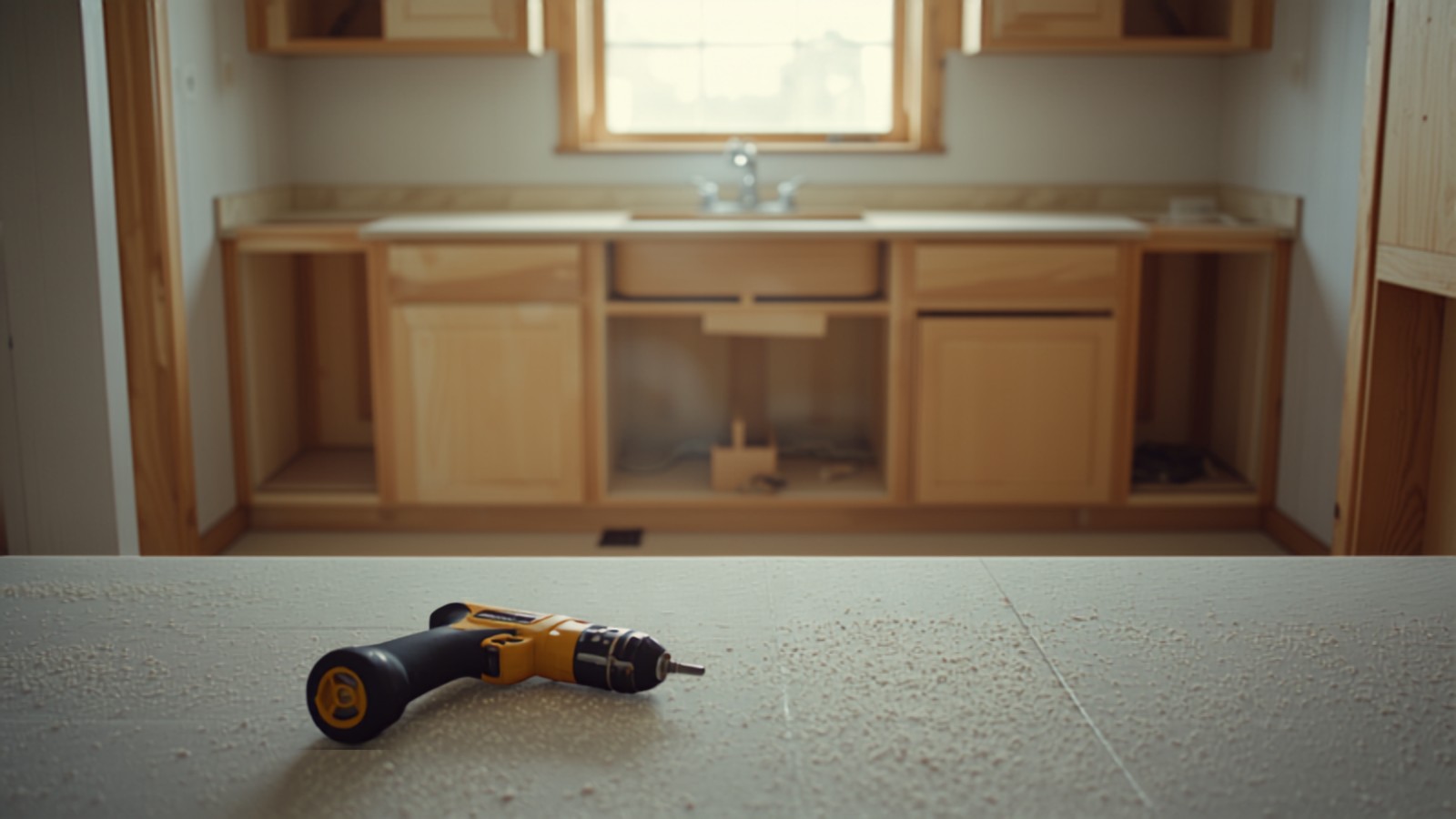
Your last five kitchens were good work. The tile lines run true. The cabinet reveals are even all the way down. You took a few pictures on your phone because you were proud of it, and they landed in a camera roll with eleven thousand others — a cracked flange, a water heater serial number, a lumberyard receipt.
Meanwhile your website shows three photos. One bathroom from years back. One truck. One image of a house not in Wisconsin.
That is the problem in a sentence: the work exists, the evidence of the work does not. A homeowner choosing between you and two other contractors cannot tell your finish work is a level above. She is not standing in that kitchen. She is in her own at nine at night with a phone, and all she has is what you showed her.
Photos Do More Selling in This Trade Than Anywhere Else
A homeowner cannot judge your framing or your flashing detail. She has no way to evaluate craft, so she judges what she can see: does this look like the work of someone careful? Every homepage claims quality craftsmanship. Photos are the one part a stranger cannot fake with a paragraph.
Snapshot Versus a Photo That Sells
You do not need a photographer on every job. That is not realistic for a small crew. A phone in good light is enough. The gap is habits.
- Light beats everything. Open every blind, turn on every fixture. Outside, shoot early morning or the last hour before sunset — noon sun throws hard shadows and washes out siding color. If the light is bad, come back.
- Clear the frame. Five minutes, and the biggest difference. Pull the drop cloths, move the shop vac and cords, peel the blue tape. Nobody sees a finished kitchen with a sawhorse in it.
- Stage lightly, on purpose. A bowl on the island, a towel folded on the vanity. Two or three objects reads as a room someone lives in, not an empty box.
- Shoot from a corner, at chest height. Straight in from the doorway flattens the room; a corner gives depth. Phone at eye level makes ceilings look short.
- Before-and-afters carry the weight. An after shows a nice kitchen; the pair shows what you can do. A homeowner with a dated ranch in Two Rivers connects to a kitchen that started out like hers.
- Shoot the same angle twice. Almost nobody does this, and it is what makes before-and-afters work. On the first walkthrough, stand somewhere specific, note it, and shoot the after from that exact spot.
- Take more than you need. One wide shot, then three or four tight ones of the details — the miter, the stair skirt. Those separate you from a company that also installs cabinets.
The Habit That Makes It Stick
Every contractor intends to take photos. Almost nobody does it consistently, because “when I remember” is not a system.
Replace it with four defined moments, treated like the final walkthrough: on the first walkthrough before anything is touched, once during demo or framing, once at rough-in if the work is worth showing, and the day it is finished before the last tool goes in the truck. Attach those to the job, not your memory — put it in the crew’s closeout checklist. A decent phone photo from your foreman beats a perfect one you never took.
A Photo Without a Story Is Half a Photo
An unlabeled gallery does not answer what the homeowner is actually asking: have you done my project? Each project needs five or six sentences beside it — the town (Manitowoc, Mishicot, out by Valders), what kind of house it was, what the homeowner wanted, what you did, one problem you hit and how you handled it, how long it took.
That problem sentence is the most persuasive line on the page. Every homeowner is quietly afraid of what happens when something goes wrong. Telling them you found knob-and-tube behind the plaster and what you did about it says more than any adjective.
The write-ups also do a second job. Search engines read text, not pictures. A page that says “kitchen remodel in a 1950s Cape Cod in Two Rivers” can turn up when somebody there searches for it; a bare photo grid cannot. Honest, specific project pages are part of how local search visibility gets built.
Ask Permission, and Handle Privacy Like a Pro
Ask before you photograph someone’s house for marketing, and get the yes in writing — a text or an email counts. Bring it up at the start of the job, not the end; people agree more easily to a plan than an afterthought.
Then leave out what you do not need: house numbers, street signs, mail, license plates, family photos on the wall. Say the town, not the address. If someone later asks you to take a photo down, take it down.
Why a Gallery Beats a Slideshow
Rotating banners feel impressive to build and work poorly here. The visitor has no control, photos leave before she has looked at them, and on a phone the whole thing gets swiped past.
A grid is better: everything visible at once, tap to enlarge, nothing moving. She scans until something looks like her house, then goes deep on it. Group by project rather than dumping 200 loose images in a pile, and let each project open into its own page — a straightforward part of a well-built contractor website.
What to Do With Ten Years of Unsorted Photos
The backlog feels impossible, so it never starts. Make it smaller. Do not sort a decade — pick your eight best finished projects from the last three years, the ones you would drive a prospect past. One folder each, whatever the camera roll has. Some will have no before shot; a strong after with a good write-up still sells.
Then write six sentences per project from memory. That is a portfolio in one rained-out day, and one project a month keeps it growing.
Where This Fits With Everything Else
Photos are the front half of the sale. The back half is what happens after somebody looks at them and reaches out, and that is where good contractors lose jobs they already won. She fills out the form at nine at night; you see it the next evening, after two other companies have called her back.
Closing that gap is most of what we do for construction and remodeling companies in Manitowoc County. We build the site and the project galleries, write the project pages so they can be found in local search, then put something on the other end of the inquiry: an AI receptionist that answers when you cannot, a chatbot that takes details after hours, automated follow-up on estimate requests, online booking, and review requests that go out once a job closes. Some want a monthly plan; some want one piece. You can read how we work.
None of that replaces the photos. It keeps them from working into a void.
Work nobody sees may as well not have happened. The free Founder-Led Marketing course covers a weekly loop for getting it in front of people, using your own voice and the phone already in your pocket.
Common Questions
How many project photos does my website actually need?
Fewer, well-organized projects beat a big pile of loose images. Eight to twelve complete projects, each with six to ten photos and a short write-up, gives a homeowner enough to find something like her own house. Depth per project matters more than total count.
What time of day should I take job photos?
Outside, shoot early morning or the last hour or two before sunset. Midday sun creates hard shadows and washes out siding and roof color. Inside, open the blinds and turn on every light, and favor a bright overcast day. If the light is bad, come back.
Do I need a real camera, or is my phone good enough?
A current phone in good light is enough for a website gallery. The difference is habits, not equipment: clearing the clutter, opening the blinds, shooting from a corner at chest height, taking a matched before shot. Hiring a photographer for every job is not realistic.
I always forget the before photos until demo has started. What do I do?
Move them to the first walkthrough, before you quote the job. You are already in the room measuring. Take five wide shots from fixed spots and note where you stood. The before photos exist whether or not you win the work, and you know where to stand later.
What should I write next to each project?
Five or six plain sentences: the town, what kind of house it was, what the homeowner wanted, what you did, one problem you ran into and how you handled it, and how long it took. The problem sentence carries the most weight with a nervous homeowner.
Can I post photos of a customer’s house without asking them?
Ask first, and get the yes in writing — a text or an email is fine. Bring it up at the start of the job rather than after, since people agree more easily to a plan than an afterthought. Leave out house numbers, street signs, mail, and license plates.
Should I put project photos on social media or on my website?
Both, but the website compounds. Social media posts get seen for a day and then scroll away, and you do not control the platform. Project pages on your own site stay searchable for years and can turn up when someone nearby searches for that kind of work.
I have a decade of photos on old phones. Where do I start?
Do not sort a decade. Pick your eight best finished projects from the last three years and make one folder each. Pull whatever exists, accept that some lack a before shot, and write six sentences per project from memory. That is a real portfolio in about a weekend.
If you want an outside read on where your site stands — whether your photos are doing anything for you, whether your projects turn up for people searching nearby, and what happens to an inquiry that arrives while you are on a job — we offer a free audit. It is a look at what is there and what is missing, not a sales appointment.

Michael Cummings
Founder of MCM Digital Products. Building and running growth engines for service businesses since 2011 — from Manitowoc, Wisconsin, where his neighbors have elected him to City Council three times.
More about Michael →
Run this play in your business
Want this working for you — without doing any of it yourself?
Every play on this site is something we build and manage for clients every day. Book a free audit and I'll show you exactly where this applies to your business — with your real data.
Get My Free Business AuditPrefer to learn it yourself? Start free in the MCM360 Academy →